
Blog
Can Scented Candles Trigger Headaches? Causes
Aug
A candle that makes one person feel instantly at home can leave another reaching for fresh air. So, can scented candles trigger headaches? For some people, yes. Strong fragrance, a poorly ventilated room, a long burn time or an existing sensitivity can all play a part. That does not mean scented candles are off the table forever – it often means finding a gentler way to enjoy them.
For many of us, fragrance is part of a comforting routine: Fresh Linen in a newly tidied bedroom, Ginger and Lemongrass after a busy day, or a warm bakery-style scent on a quiet evening. The key is to make that moment feel good from start to finish.
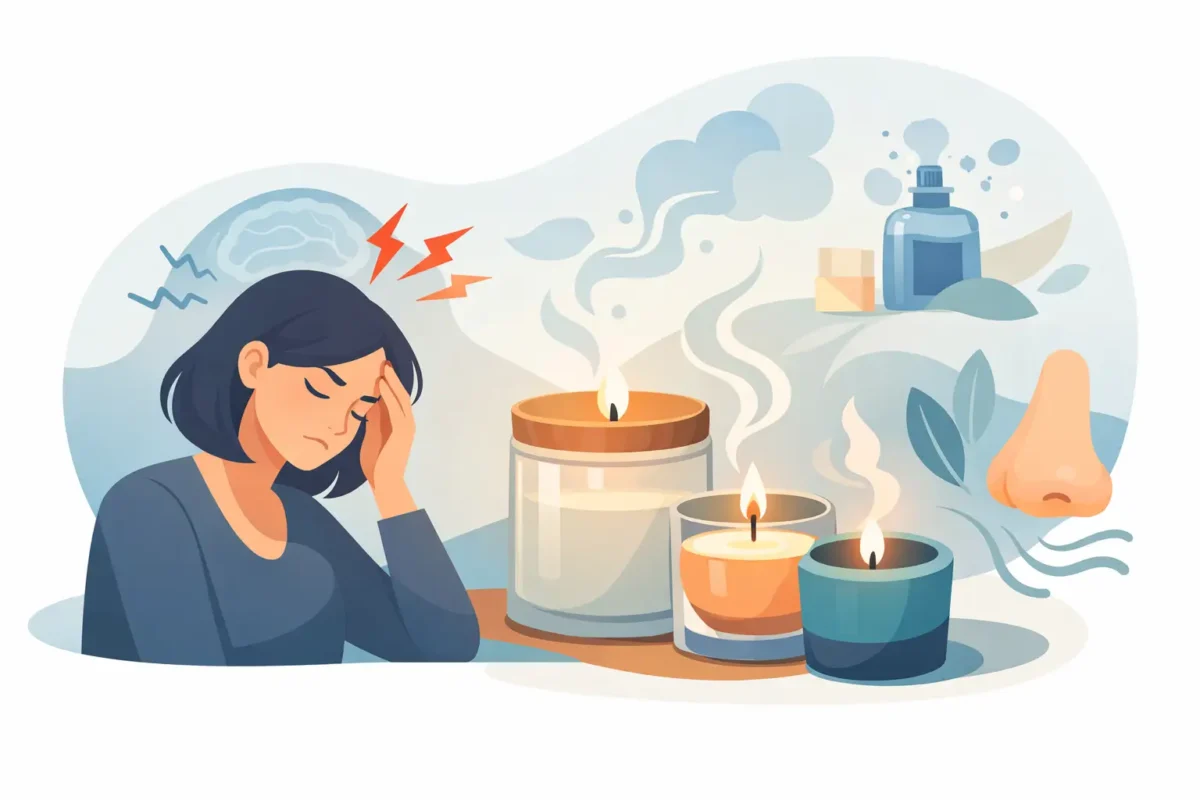
Can scented candles trigger headaches for some people?
Headaches are personal, and there is rarely one single cause. A scented candle may be a trigger for somebody who is prone to migraines, sensitive to fragrance, dealing with allergies or already tired, dehydrated or stressed. In those moments, an intense smell can feel far more noticeable than it normally would.
Fragrance can stimulate the trigeminal nerve, which is involved in sensation around the face and head. For people with fragrance sensitivity or migraine, that stimulation may contribute to head pain, nausea or a feeling of pressure. A scent does not have to smell unpleasant to cause a problem. Even a favourite vanilla, floral or fruity fragrance can be too much when it is very concentrated.
The room matters too. Burning a strongly scented candle in a small, closed space allows fragrance to build up quickly. Bathrooms, small bedrooms, home offices and flats with little airflow can all make a scent feel heavier than it would in a larger lounge with an open door or window.
It is also worth remembering that a headache after lighting a candle is not always caused by the candle. Screen time, low water intake, skipped meals, poor sleep, central heating and changes in the weather are common contributors. Still, if you notice the same pattern several times – candle on, headache follows – it is sensible to take that signal seriously.
Why some candle scents feel stronger than others
A fragrance’s strength is not simply about whether it is floral, sweet, fresh or spicy. It depends on the fragrance blend, how much fragrance is used, how quickly it fills a room and how your own nose responds that day.
Rich gourmand scents such as espresso, caramel, vanilla or bubblegum can feel wonderfully cosy, but they may seem more intense in a compact room. Bright citrus and herbal notes can feel clean and uplifting, yet their sharpness can be a lot for someone who is already feeling sensitive. Floral and perfume-like scents can have the same effect. There is no universal “safe” scent family – preference and sensitivity are individual.
Natural does not automatically mean headache-free, either. Essential oils and botanical ingredients still have a scent, and natural aromas can be powerful. Likewise, a vegan-friendly soy candle can be a thoughtful choice for your home, but it cannot promise that every person will be comfortable with every fragrance.
The aim is not to chase a completely scent-free home if you enjoy fragrance. It is to choose a level of scent that feels like a gentle background rather than the main event.
Burn habits that can make a difference
A few small changes can make candle time more comfortable, particularly if you are trying a new fragrance or know that you are sensitive to strong smells.
- Start with a short burn. Try 30 to 60 minutes first, rather than lighting a candle for a whole afternoon or evening.
- Give the room some airflow. Open a window slightly, leave the door ajar or choose a larger room where the fragrance has space to disperse.
- Use one fragranced product at a time. A candle, wax melt, reed diffuser and room spray together can create more scent than you realise.
- Keep the wick trimmed. A wick trimmed to around 5mm before lighting helps the candle burn more cleanly and steadily. Extinguish it if the flame becomes unusually large or starts to smoke.
- Move away from the source. You do not need to sit beside a candle to enjoy it. Place it safely across the room and let the scent travel gently.
Burning a candle for less time may mean a more subtle fragrance experience, but that can be a worthwhile trade-off. A scent that stays softly present is often more relaxing than one that fills every corner within minutes.
Choose the occasion as well as the scent
Save fuller, sweeter fragrances for spacious rooms or moments when you can have a little ventilation. For smaller areas, consider a lighter approach: burn for a shorter time, choose a scent you already know you enjoy, or simply leave an unlit candle open for a very soft background aroma.
It can also help to avoid lighting a candle when you already have a headache or feel a migraine coming on. The scent may not be the original cause, but adding any fragrance during a sensitive moment can make you feel worse. Fresh air, low light and a quieter space are often the kinder choice.
Does soy wax help if candles give you headaches?
Soy wax is popular because it is plant-based, vegan-friendly and can offer a clean, slow burn when a candle is well made and cared for. Many people choose soy candles as a more environmentally mindful alternative to conventional paraffin wax candles, and it is a natural fit for an everyday home-fragrance routine.
However, soy wax is not a guaranteed answer to fragrance-triggered headaches. If fragrance is what bothers you, changing the wax alone may not solve the issue. The fragrance strength, burn time and ventilation are usually just as relevant.
A well-maintained soy candle may be a comfortable option for some households because it is designed for a calm, even burn. But the honest answer is that it depends on the individual. Someone who reacts to a particular scent may feel better with a different fragrance, a shorter burn or no added fragrance at all on certain days.
How to work out whether a candle is the trigger
If you are unsure, try a simple, low-pressure test over a few separate occasions. Choose one candle, light it in a ventilated room for a short period and pay attention to how you feel during the burn and afterwards. Avoid testing on a day when you already have a headache, are unwell or have a migraine brewing, as it will be harder to tell what is affecting you.
Keep the rest of your fragrance routine simple that day. Skip the wax melt, diffuser and heavily scented cleaning products so you are not dealing with several possible triggers at once. If one fragrance consistently causes discomfort, stop using it and choose something softer or take a break from scented products.
Do not try to push through symptoms to “get used to” a fragrance. Your home should feel like a place to settle into, not somewhere you have to tolerate.
When to seek medical advice
Most occasional headaches have everyday causes, but frequent, severe or changing headaches deserve proper attention. Speak to a GP or pharmacist if headaches keep returning, interfere with daily life, are linked with migraine symptoms, or you are concerned about an allergy or sensitivity.
Seek urgent medical help for a sudden and severe headache, or a headache accompanied by symptoms such as confusion, fainting, weakness, difficulty speaking, vision changes, a high fever or a stiff neck. A candle may be coincidental, so it is always better to put your wellbeing first.
Enjoying fragrance more gently at home
There is no need for home fragrance to be all or nothing. A shorter burn in a well-aired room may be enough to bring warmth to an evening. You may find that a crisp, familiar scent works best in the kitchen, while a cosy sweet fragrance is nicer in a larger living room with the window slightly open.
If you are buying a candle as a gift, it can be thoughtful to choose a balanced, crowd-pleasing scent or pair it with the gentle suggestion that they enjoy it at their own pace. At Pinecroft Candles, the pleasure is in making everyday spaces feel a little more special, without making fragrance feel overwhelming.
Trust your own comfort level. The best scent for your home is the one that brings a little tranquillity, then quietly lets you get on with enjoying the room.
